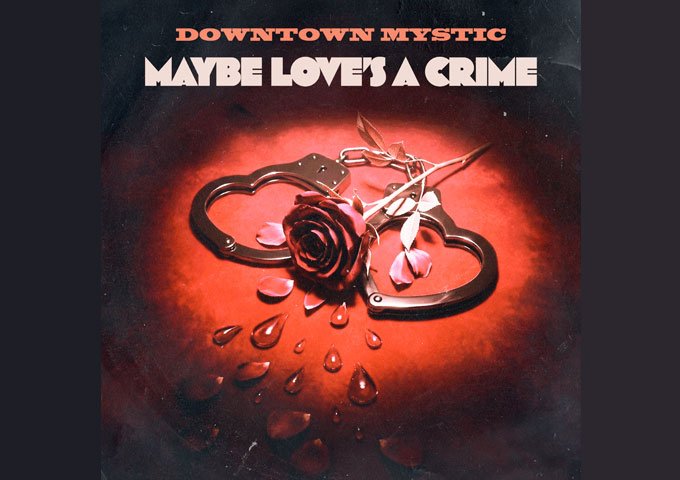
DownTown Mystic continues to champion the enduring power of independent roots rock with the release of “Maybe Love’s A Crime.” The new single pairs Robert Allen’s distinctive songwriting with the rhythmic sophistication and melodic warmth of classic American rock ’n’ roll. A seasoned rhythm section, led by Steve Holley and Paul Page, establishes an infectious shuffle that gives the track its unmistakable momentum. Jeff Levine’s expressive piano work adds depth to the vocal recording while providing an instrumental showcase on the accompanying TV Mix. Released through The Orchard/Sony Music, the single demonstrates how DownTown Mystic can honor rock’s history while maintaining a sound entirely its own.
American roots-rock purveyor DownTown Mystic returns with another infectious reminder that rock ’n’ roll never loses its power when it is built on great songwriting, exceptional musicianship, and an instinctive understanding of the groove. Released worldwide to streaming platforms on October 9 through The Orchard/Sony Music, “Maybe Love’s A Crime” delivers an immediate combination of blues-inflected rhythms, soulful piano, and the kind of unpretentious swagger that made classic American rock ’n’ roll an enduring cultural force. Behind the DownTown Mystic name stands songwriter and producer Robert Allen, whose musical vision continues to connect the foundations of vintage rock with the vitality of a sound that remains remarkably alive in the present.
Scheduled to arrive at U.S. college radio on October 13, with promotion handled by Brandon Day and Tinderbox Music, “Maybe Love’s A Crime” arrives as a two-track single featuring the original vocal recording and an instrumental TV Mix. Both versions illuminate different dimensions of the same carefully constructed musical experience. The vocal edition places Allen’s storytelling at the forefront, while the instrumental mix offers a more expansive appreciation of the musicianship, particularly the dazzling keyboard work of Jeff Levine, whose piano performance gives the arrangement an unmistakable personality.
The track’s appeal begins with its rhythm. A smooth, walking bassline moves beneath a satisfyingly propulsive drum pattern, establishing a mid-tempo shuffle that feels relaxed without ever becoming lethargic. The piano sparkles across the arrangement, introducing a melodic richness that complements the earthy rhythmic foundation. Rather than chasing contemporary production trends, DownTown Mystic embraces the tactile character of musicians playing together, allowing each instrumental contribution to breathe while maintaining the tightness essential to memorable rock ’n’ roll.
That chemistry is no accident. The rhythm section brings together drummer Steve Holley, whose credits include work with Paul McCartney and Elton John, and bassist Paul Page, known for his associations with Ian Hunter and Dion. Their performances possess the instinctive cohesion that separates a merely competent rhythm section from one capable of transforming a good song into something genuinely infectious. Remarkably, the pair recorded the shuffle in a single take, capturing the spontaneous interplay that can be difficult to manufacture through painstaking studio editing.
The groove itself emerged from a conversation between Page and Allen, who was weighing different rhythmic directions for the track. Having worked with rock ’n’ roll legend Dion, Page suggested a shuffle inspired by the singer’s distinctive approach. Allen immediately recognized the connection, explaining that hearing Dion’s name clarified precisely what the song needed. As a longtime admirer of Dion, he understood how that rhythmic language could bring the composition into focus.
It is an illuminating creative decision. Dion’s music drew upon Bronx street-corner doo-wop, blues phrasing, and a forceful rock ’n’ roll pulse, combining them into a style that felt both streetwise and effortlessly melodic. Songs such as “The Wanderer” and “Runaround Sue” demonstrated how a persistent shuffle could become the engine of an entire performance, giving vocals, guitars, and harmonies a common rhythmic center. That foundation also informed Dion’s later explorations of electric blues, demonstrating the depth and adaptability of the musical vocabulary he developed.
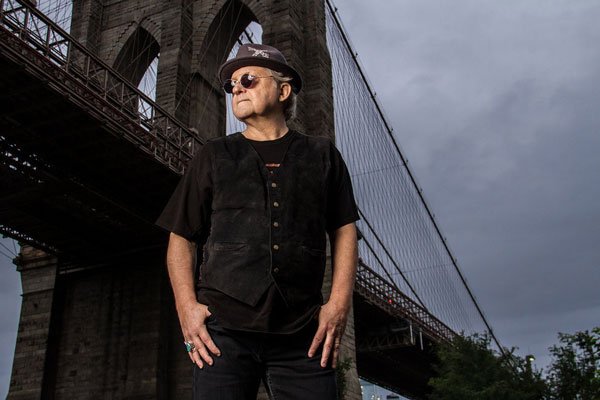
Allen has previously described Dion as probably the only rock ’n’ roll artist who carried him through the early 1960s before The Beatles arrived. That admiration is audible in the spirit of “Maybe Love’s A Crime,” although the song never feels like a simple exercise in retro imitation. Instead, the influence operates at a deeper level, informing the arrangement’s rhythmic instincts and its ability to make a familiar musical language sound personal. The result respects its roots while demonstrating why those roots continue to nourish contemporary independent rock.
The instrumental contributions are central to that success. Jeff Levine, whose extensive credits include Joe Cocker and Hall & Oates, brings a remarkable sense of character to the piano parts. His playing is more than decorative accompaniment. The keys answer the vocal phrases, reinforce the groove, and add flashes of melodic color that keep the arrangement moving. There is a warmth to his performance that evokes the golden age of piano-driven rock without sacrificing precision or individuality.
On the TV Mix, Levine’s playing assumes an even more prominent role. With the lead vocal removed, the piano becomes the principal expressive voice, revealing details that might otherwise remain in the background. His fluid phrasing and confident touch allow the instrumental version to stand as an engaging listening experience in its own right rather than a merely functional alternative mix. It also highlights the strength of Allen’s underlying composition, which remains compelling even when its lyrical narrative is taken away.
Yet the song’s emotional center lies in its words, written by Robert Allen and G.T. Sullivan. “Maybe Love’s A Crime” explores the uneasy territory between romantic attachment, suspicion, wounded pride, and the fear that love may no longer be enough to hold two people together. Its narrator senses that something has gone wrong, addressing a partner whose behavior has become difficult to trust. He wants honesty and reassurance, yet he increasingly suspects that separation may be inevitable.
The central refrain turns that uncertainty into a provocative question: can love itself become a kind of crime when affection is tangled with mistrust and emotional pain? The narrator continues to believe that genuine feeling exists beneath the surface, even as his partner appears ready to leave. His insistence becomes both a plea for recognition and an accusation against a relationship that no longer offers the security he craves.
This lyrical tension contrasts effectively with the music’s buoyant shuffle. While the narrator struggles with uncertainty, the rhythm remains inviting, steady, and infectious. That balance between lyrical tension and musical warmth is one of DownTown Mystic’s greatest strengths. The composition feels rooted in a tradition where strong melodies, memorable hooks, and direct storytelling work together without excessive ornamentation. The arrangement gives the lyrics room to breathe, while the instrumental performances provide enough character to make repeated listens rewarding. It is classic rock ’n’ roll craftsmanship delivered with conviction rather than an attempt to recreate the past note for note.
“Maybe Love’s A Crime” also arrives at a particularly productive moment for the project. DownTown Mystic follows two acclaimed 2026 EP releases, Mystic Highway Road Trip and On E Street Remix, the latter featuring Rock & Roll Hall of Fame inductees Max Weinberg and Garry Tallent of The E Street Band. Those releases have helped reinforce Allen’s reputation as an independent artist with a clear musical identity and a commitment to working with seasoned performers whose experience adds genuine depth to his recordings.
That philosophy is central to the project’s enduring appeal. By collaborating with musicians who understand the subtleties of rock, blues, and roots music, Allen captures the spontaneous interplay and individual character that distinguish a living performance from a meticulously assembled imitation. His approach is firmly grounded in musical tradition, but the results remain accessible to listeners discovering these sounds for the first time.
The next chapter is already on the horizon. Sha-La Music is preparing to release On E Street Remix: The Album on Black Friday, November 27, with six new tracks planned for the collection. Following the momentum of the two EPs, the forthcoming album promises to extend a particularly productive period for DownTown Mystic and its ongoing exploration of classic American rock ’n’ roll.
For now, “Maybe Love’s A Crime” offers a satisfying demonstration of what makes the project distinctive. The song combines an engaging emotional conflict with a rhythm section that feels completely at home in the pocket, a piano performance rich in personality, and a production sensibility that values musicianship over unnecessary embellishment. Its connection to Dion and the foundations of American rock ’n’ roll is unmistakable, but its appeal comes from the way those influences serve a composition with its own identity.
“Maybe Love’s A Crime” reaffirms DownTown Mystic as a compelling voice in contemporary roots rock, proving that the classic rock ’n’ roll spirit still has plenty of stories left to tell.
OFFICIAL LINKS:
Website: https://downtownmystic.net/
FB: https://www.facebook.com/DTMystic
Spotify: https://tinyurl.com/y7ntbt88
DownTown Mystic YouTube Channel: https://www.youtube.com/DowntownMystic1